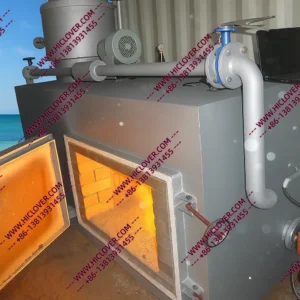
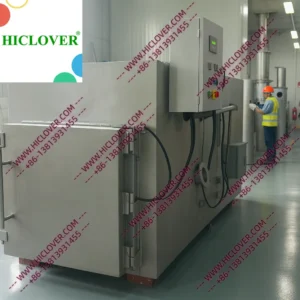
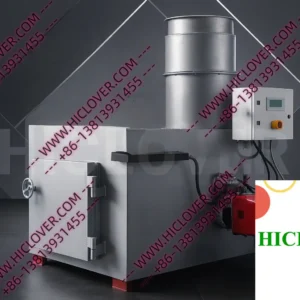
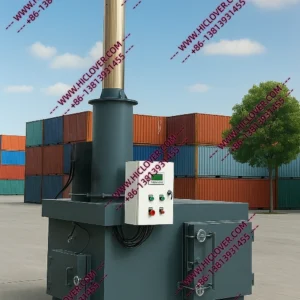
Incinerators differ from the simpler methods of open burning as the operator has a higher degree of control over the burning process. The resulting higher temperatures, longer holding times and greater turbulence lead to more complete combustion of the waste. Although a wider range of wastes can be destroyed using high temperature single or dual-chambered incinerators, determined efforts should still be taken to reduce the quantity and type of waste generated and to implement other changes which would result in reductions in air emissions. Refer to section 3 for further information proper waste management practices and a listing of what waste can and cannot be incinerated.
The incinerator manufacturer’s operating instructions must be followed at all times to ensure designed temperature, holding time and turbulence conditions are achieved and to avoid damage to the facility. When operating during winter months, additional care must be taken because cold air introduced into the primary and secondary chambers may make it difficult for normal operating temperatures to be achieved. Operators must be properly trained and qualified to operate the equipment under both normal and emergency conditions. Owners are strongly encouraged to consult system manufacturers or other qualified persons with expertise before purchasing an incinerator. Additional guidance on the selection of incinerator technologies and their operational requirements can be obtained by referring to Environment Canada’s Technical Document for Batch Waste Incineration.
The installation and operation of monitoring and control systems is critical for the proper and safe operation of any incinerator. The design, installation, certification and operation of continuous emissions monitoring systems (CEMS) should comply with the principles described in Environment Canada’s Protocols and Performance Specifications for Continuous Monitoring of Gaseous Emissions from Thermal Power Generation. While the document is written for power generation facilities, the principles apply equally well to other types of facilities and continuous emissions monitoring systems. For incinerators operating in Nunavut, key operational parameters must be monitored at all times using on-line instruments capable of continuously measuring the combustion process and stack emissions quality. These instruments should be equipped with visible and audible alarms and be on-line whenever the incinerator is in operation, including ‘start-up’ and ‘cool down’ phases. Table 3 lists the monitoring and control system requirements.
HICLOVER is growing brand for environmental protection field, and market share with most of Africa, Middle East, Southeast Asia countries and part of North America, Europe territory. We are trusted partner for governmental organizations, non-profit organizations, international contractors, logistics organizations, military, pet cremation business owners, etc. We have export experience more than 40 countries, including war zone like Iraq, Afghanistan, Somalia, South Sudan. Mobile: +86-13813931455(WhatsApp) Website: www.hiclover.com Email: [email protected] Email: [email protected]