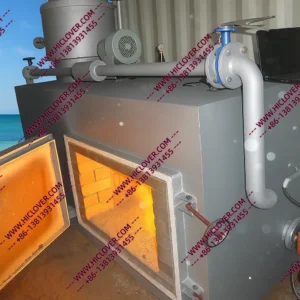
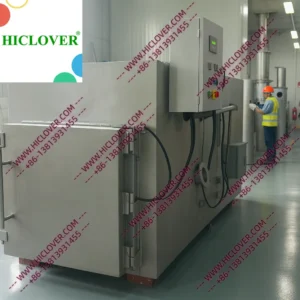
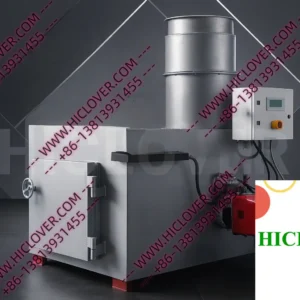
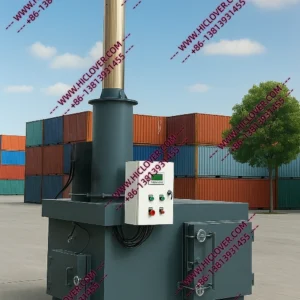
Medical bio-waste incinerators are not a one-size-fits-all solution; rather, they come in various designs, each tailored to specific waste streams, capacities, and operational requirements. The selection of an appropriate incinerator type is crucial for ensuring efficient waste destruction, compliance with environmental regulations, and cost-effectiveness. The most common types of medical incinerators include controlled air incinerators, excess air incinerators, and rotary kiln incinerators, each employing distinct combustion principles and offering unique advantages. Understanding these different types of medical incinerators is essential for healthcare facilities to make informed decisions regarding their waste management strategies.
HICLOVER is growing brand for environmental protection field, and market share with most of Africa, Middle East, Southeast Asia countries and part of North America, Europe territory. We are trusted partner for governmental organizations, non-profit organizations, international contractors, logistics organizations, military, pet cremation business owners, etc. We have export experience more than 40 countries, including war zone like Iraq, Afghanistan, Somalia, South Sudan. Mobile: +86-13813931455(WhatsApp) Website: www.hiclover.com Email: [email protected] Email: [email protected]
Controlled air incinerators, also known as starved-air or two-stage incinerators, are widely utilized for medical waste disposal due to their efficiency in handling a variety of waste types and their ability to minimize emissions. These units operate on a two-stage combustion process. In the primary chamber, waste is combusted with less than the stoichiometric amount of air (starved air conditions), leading to pyrolysis and gasification of the waste material at temperatures typically around 650°C to 900°C (1200°F to 1650°F). This process generates combustible gases and char. These gases then flow into a secondary chamber, where excess air is introduced, and combustion is completed at much higher temperatures, usually between 980°C to 1200°C (1800°F to 2200°F). This two-stage approach ensures thorough destruction of organic compounds and pathogens, while the controlled air supply in the primary chamber helps to minimize particulate carryover and the formation of pollutants like dioxins and furans. Advantages of controlled air incinerators include their relatively compact size, good emission control capabilities when properly operated, and suitability for a wide range of medical wastes. However, they require careful control of air-to-fuel ratios and can be sensitive to variations in waste composition and moisture content.
Excess air incinerators, sometimes referred to as multiple chamber incinerators, operate with more than the theoretically required amount of air for complete combustion throughout the process. These incinerators typically have a primary combustion chamber where the waste is burned, and the hot flue gases then pass through one or more secondary chambers where further combustion occurs, ensuring complete burnout of any remaining combustible materials and pollutants. The abundance of oxygen helps to fully oxidize the waste, reducing the risk of producing harmful by-products from incomplete burning. Excess air incinerators are often simpler in design compared to controlled air units and can be effective for wastes with high moisture content or low calorific value, as the extra air supports more consistent and complete combustion. While they can achieve high destruction efficiencies, they may require more sophisticated air pollution control systems to manage potential emissions, as the higher air volume can lead to increased entrainment of particulate matter and potentially higher fuel consumption to maintain operating temperatures.
Rotary kiln incinerators represent a more robust and versatile solution, particularly suited for handling large volumes and diverse types of medical waste, including pathological waste, sharps, liquids, and sludges. A rotary kiln incinerator consists of a large, inclined, rotating cylindrical chamber. Waste is fed into the higher end of the kiln, and as the kiln rotates, the waste tumbles and moves slowly towards the lower end. This continuous movement ensures thorough mixing of the waste with combustion air and exposes all surfaces of the waste to high temperatures, typically ranging from 850°C to 1400°C (1560°F to 2550°F). The residence time of the waste in the kiln can be controlled by adjusting the rotation speed and inclination of the kiln. The gases generated during combustion in the kiln then pass into a secondary combustion chamber, similar to other incinerator types, for complete destruction of pollutants at high temperatures. Rotary kiln incinerators are highly effective for a wide array of waste streams, including those that are difficult to process in other types of incinerators. Their advantages include high throughput, ability to handle heterogeneous waste, and excellent destruction efficiency. However, they are generally more complex, have higher capital and operational costs, and require more space than other types of medical incinerators. Specialized incinerators also exist, such as those designed specifically for cytotoxic waste, which may incorporate even higher temperatures or specific flue gas treatment technologies to handle the particularly hazardous nature of these materials. The choice among these types of medical incinerators ultimately depends on the specific needs, waste profile, and regulatory requirements of the healthcare facility or waste treatment plant.