Waste Management Planning

The generator of a waste is responsible for its safe management from cradle-to-grave. Using raw materials efficiently and reducing the amount of waste generated is the most important step in waste management planning.  For example, through improved waste management planning, it may be possible to reduce or eliminate the need to burn or incinerate waste altogether.  Undertaking a waste audit will help to identify the type and amount of waste being generated, the costs of current management options and examine opportunities for better managing the waste. This information will also enable the generator to implement a waste management regime that is tailored to its own unique needs, location and circumstances.

Even with improved waste reduction measures in place there will be waste generated.  Waste by its nature is usually a mixture of different unwanted materials. The segregation and diversion of different types of waste is an effective way to reduce the amount of waste requiring costly handling, storage, treatment and disposal. Segregation also enables the reuse of certain types of waste for a different purpose.  Reuse activities may be undertaken either on-site or off-site.

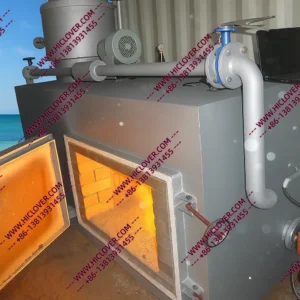
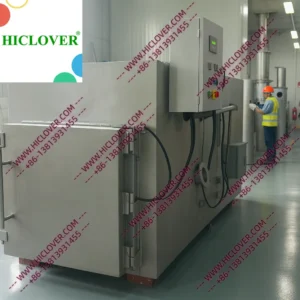
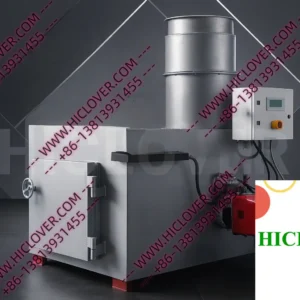
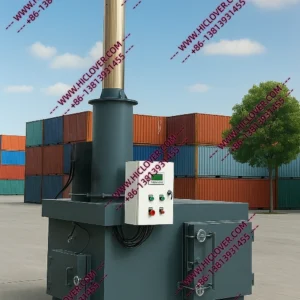
Treatment and disposal is the last step in effective waste management and should be undertaken only after all other practical reduction and reuse options have been examined.  A wide variety of treatment and disposal options exist and each must be examined before deciding on a final method, regardless of whether waste is to be treated and disposed of on-site or off-site. If burning and incineration is the method of choice, equipment must be designed and sized accordingly to accommodate the type and quantity of waste being produced. As described in the following section, open burning is capable of safely destroying a limited number of types of waste. While incinerators are capable of safely destroying a wider range of waste, many types of waste must still be diverted. Because of this, on-site segregation remains a critical component of any waste management plan.

HICLOVER is growing brand for environmental protection field, and market share with most of Africa, Middle East, Southeast Asia countries and part of North America, Europe territory. We are trusted partner for governmental organizations, non-profit organizations, international contractors, logistics organizations, military, pet cremation business owners, etc. We have export experience more than 40 countries, including war zone like Iraq, Afghanistan, Somalia, South Sudan. Mobile: +86-13813931455(WhatsApp) Website: www.hiclover.com Email: [email protected] Email: [email protected]

Overall, the following principles should be used to guide responsible solid waste management planning:

Know your waste by conducting a waste audit.
Reduce the amount of solid waste produced by implementing strategic purchasing policies that focus on the substitution or reduction of purchased products as well as product design, composition and durability.
Reuse waste where different purposes can be identified.
Segregate and divert mixed waste streams enabling waste to be reused or recycled, thereby reducing the amount of waste to be disposed of.
All practical disposal methods should be examined. Burning and incineration of waste should be considered only where other practical methods do not exist.

If burning and incineration is used, the equipment chosen should be designed and sized to accommodate the waste produced, minimize fire hazard and result in the complete combustion of the waste.

[ecwid widgets="productbrowser search categories" default_category_id="CATEGORY_ID" default_product_id="PRODUCT_ID" lang="EN"]

Related Posts

Advanced HICLOVER Waste Incinerators: Integrating Engineering Precision with Economic Efficiency

Advanced HICLOVER Waste Incinerators: Integrating Engineering Precision with Economic Efficiency The adoption of advanced Somalia pet incinerator systems, which comply with high industrial standards and specific temperature…

HICLOVER Waste Incinerators: Cost-Effective Solutions for Global Waste Management

HICLOVER Waste Incinerators: Cost-Effective Solutions for Global Waste Management Informational Layer: Understanding Waste Incineration Waste incineration is a waste treatment process that involves the combustion of organic…

HICLOVER Waste Incinerators: Engineering Reliability and Global Market Leadership in Waste Management

HICLOVER Waste Incinerators: Engineering Reliability and Global Market Leadership in Waste Management 1. What are waste incinerators and how do they work? Waste incinerators are specialized incineration…

steps of medical waste management

Average 20%-25% of the total waste generated by healthcare establishments is regarded as hazardous and may create a variety of health and environmental risks if not managed…

animal incinerator prices

animal incinerator prices according to the capacity or the size want to cremation. The pet cremation equipment humanized design with movable platform, small space covers for modern…

Pyrolytic Double Chamber Incinerator Small Size:Burning Rate:30-45 kg/hr;Maximum Load Capacity:400 kg

Items/Model TS50(PLC) Picture Principle Solid Waste Incineration Burn Rate 30-45 kg/hour Control Mode PLC(Programmable Logic Controller Incinerator) Combustion Chamber 560L Internal Dimensions 100x80x70cm Secondary Chamber 280L Smoke…